Instant Bitcoin checkout arrives, but risk now shifts to settlement controlGoMining's GoBTC Pay Bitcoin checkout system now has a live integration surface for its biggest claim: BTC payments that feel instant when settlement is routed through the miner running the rails.
The company said its Gen1 SDK and API are live on June 19, giving merchants and wallet providers a path for Bitcoin checkout through a miner-operated settlement system.
The design keeps BTC as the payment asset at the point of sale while routing acceptance and settlement through GoMining's mining infrastructure. The Lightning Network, wrapped BTC, sidechains, and forced fiat conversion sit outside the path GoMining describes.
The tradeoff is concentration. Merchants can get instant confirmation, users can spend BTC without a direct transaction fee, and wallet providers can plug into an open API.
The first version also asks participants to rely on a payment rail where the miner behind the product helps control the route from checkout to final Bitcoin settlement.
GoMining says the rollout starts with up to 10 merchants and ecosystem partners, with thousands on the waiting list. That makes Gen1 an early controlled deployment built to measure whether miner-run settlement can attract wallets, merchants, and shoppers into a Bitcoin checkout loop.
GoBTC Pay Bitcoin checkout opens the integration path
GoBTC Pay's product page frames the system as a Bitcoin payment protocol for merchants and wallets, with early access open, merchant onboarding forms, a wallet and platform request flow, and access to API documentation.
The roadmap on the same page lays out a staged path for merchant POS, a dashboard, SDK support, merchant discovery, broader e-commerce support, P2P payments, fiat off-ramp tools, and spending controls, from wallet features to open payment rails.
Developers, wallets, and merchants can now evaluate the GoBTC Pay SDK and API rather than only the product concept.
The product page says payments are confirmed instantly at checkout, settle in Bitcoin, charge zero direct user fees, and avoid payment channels, wrapped tokens, sidechains, and fiat conversion at the point of sale.
Its FAQ says a customer payment is broadcast to GoMining's dedicated pool, which prioritizes it for inclusion in a block.
That setup creates a split experience. The merchant sees the transaction immediately enough to finish the sale. Final settlement follows later on Bitcoin, with GoBTC targeting an average on-chain settlement time of about 12 hours through GoMining's pool.
Merchant acceptance can feel instant while final settlement remains tied to the miner-operated route.
GoBTC claim
Mechanism
Disclosure still needed
Instant checkout confirmation
GoBTC routes the transaction through GoMining's payment and pool infrastructure.
How merchants price the gap between checkout acceptance and final Bitcoin settlement.
On-chain Bitcoin settlement
Transactions are targeted for settlement through GoMining's dedicated pool.
Pool hashpower, block-production variance, and real performance under merchant volume.
Low merchant fee
GoBTC lists a 0.2% merchant fee split between pool miners and the initiating wallet provider.
Whether wallet providers and merchants see enough value in the 0.1%/0.1% split.
Non-custodial design
GoBTC describes a 2-of-3 multisig model involving the user, GoMining, and an independent recovery custodian.
The custodian's identity, recovery process, and third-party wallet implementation details.
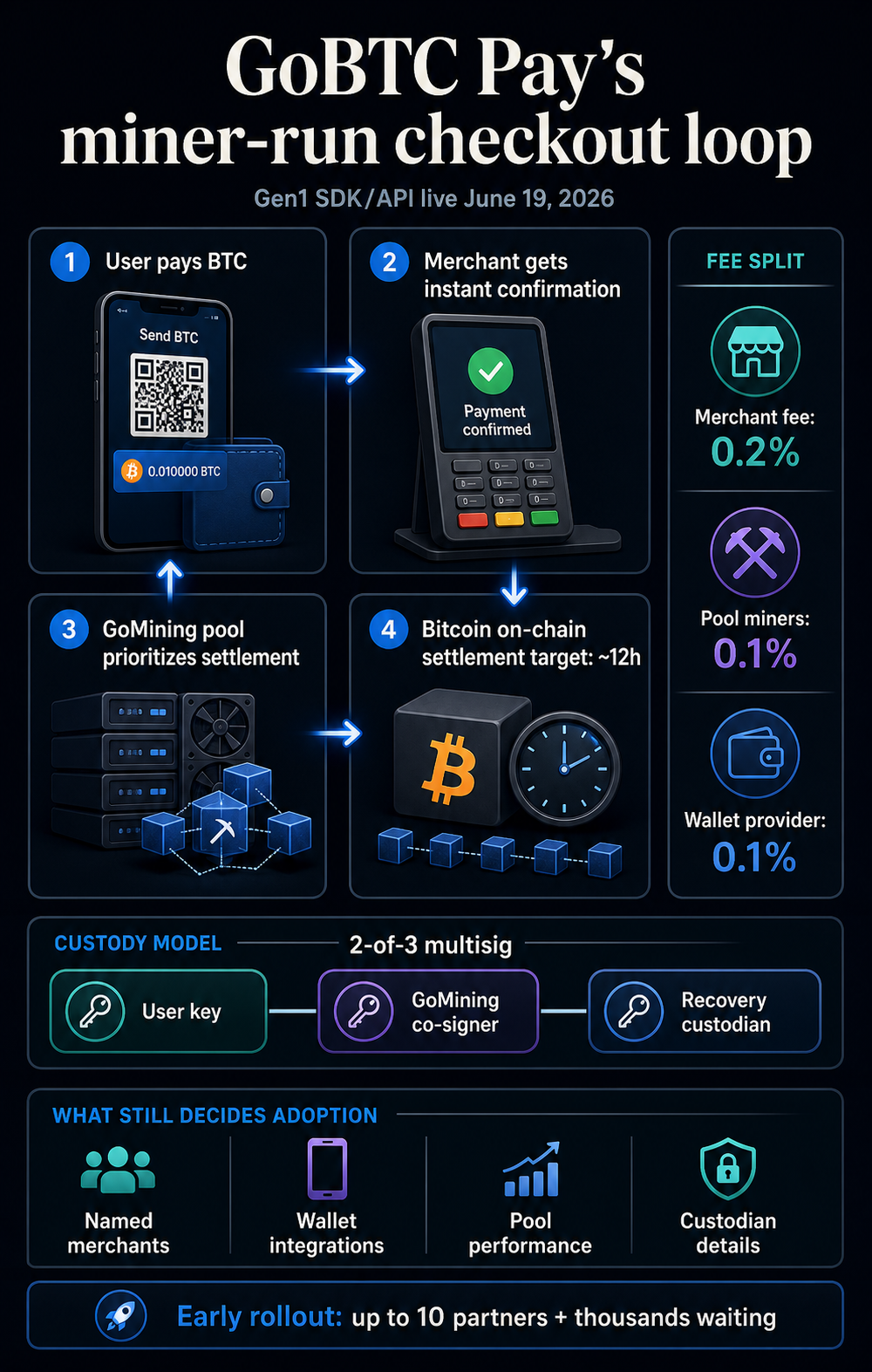
Bitcoin checkout economics are built around miners and wallets
GoBTC's fee design is the clearest sign that GoMining is trying to solve payments through incentives as well as user experience. The company says users pay no direct transaction fee, while merchants pay 0.2%.
For third-party transactions, GoMining says half of that fee goes to miners in the GoBTC pool, and the other half goes to the wallet provider that initiated the payment.
That fee split turns each transaction into a small distribution event. Miners receive a reason to support settlement, and wallets receive a reason to bring users and merchants into the network.
GoMining says it does not charge a fee on third-party transactions, framing the model as a way to drive adoption rather than lock every payment in its own app.
GoBTC also compares its merchant pitch with card-payment costs and settlement windows. That comparison should stay attributed to GoBTC, but the broader merchant backdrop is real: Visa's 2024 merchant settlement release shows that interchange rates and point-of-sale flexibility remain active pressure points for card networks.
Recent Bitcoin payment coverage has also framed lower-fee checkout as a merchant adoption pitch.
GoBTC is competing for attention with instant checkout acceptance, BTC-denominated settlement, and a fee split that rewards the wallets and miners needed to make the system useful.
Adoption remains unproven. GoMining says the first rollout will begin with up to 10 merchants and ecosystem partners, though the company has not named those initial participants.
A waiting list in the thousands shows interest. Merchant willingness to hold BTC from checkout sales, wallet provider integration priority, and real shopper spending volume will determine whether the rail moves beyond early access.
That makes the payment economics useful as a framing device rather than as evidence that the rail has already found product-market fit.
A merchant may like a 0.2% fee and faster checkout feedback, but the model still needs actual checkout volume, wallet distribution, and BTC treasury tolerance. Those operating decisions will determine whether the fee split becomes meaningful.
Pool control carries the settlement risk
The same design that makes GoBTC different also creates a main operating risk. GoMining says most Bitcoin payment companies rely on external mining pools, whereas it can prioritize GoBTC transactions because it mines blocks itself.
For merchants, that can sound practical: checkout feels fast, and final settlement still moves through Bitcoin.
For Bitcoin users, the architecture concentrates responsibility. A payment rail built around a miner-operated pool reduces one type of friction by placing more weight on GoMining's pool operation, transaction prioritization, settlement performance, and recovery design.
Miner-run settlement then becomes the central due diligence question for any wallet or merchant considering the rail.
The Stratum V2 mining protocol specification describes mining work that can be distributed by a pool or coordinated with job declaration and template distribution mechanisms.
Bitcoin Optech's pooled-mining background treats Stratum V2 as part of the broader architecture for coordinating miners. The impact of decentralization depends on implementation: who selects transactions, who controls block templates, and how much influence the pool operator retains.
GoBTC Pay's public page states that payments are routed through GoMining's private or dedicated pool. That mechanism supports a simpler merchant experience while concentrating due diligence on pool governance, transaction selection, and settlement authority.
The custody model adds another layer. GoBTC describes a 2-of-3 multisig setup in which one key is with the user, one is held by GoMining as a co-signer, and one is held by an independent recovery custodian.
The company says GoMining cannot move funds unilaterally and that the custodian provides a recovery path if a user loses access.
That model sits between custodial wallet convenience and pure self-custody. The missing disclosures are practical: the custodian's identity, the recovery process, third-party wallet implementation, outage handling, and how merchants account for the roughly 12-hour settlement target while accepting payments instantly.
Those are integration details with operational consequences. Merchants need predictable checkout confirmation, custody handling, recovery procedures, and settlement timing for daily operations.
Wallets need sufficient fee share and customer demand to justify routing users into a payment flow tied to a single miner-operated settlement path.
Wallet and merchant uptake will define the rollout
GoBTC Pay's Gen1 launch gives Bitcoin payments a path built around direct BTC settlement through GoMining's pool. The protocol now includes SDK and API access, merchant onboarding, wallet-platform requests, and an early-access funnel for a first group of partners.
External participation is the main adoption hurdle. If outside wallets integrate, named merchants go live, and settlement performance holds up through real payment volume, GoBTC Pay could become evidence that mining infrastructure can play a direct role in Bitcoin commerce.
If adoption remains within GoMining's own ecosystem, or if merchants hesitate due to delayed settlement and dependence on pools, the product will look more like a miner-controlled shortcut around Bitcoin's old point-of-sale problem than a broadly adopted payment rail.
The June 19 launch makes that tradeoff concrete: Bitcoin payments that feel simpler at checkout, paired with new reliance on the miner running the rail.
The post appeared first on CryptoSlate.
read the full story
GoMining's GoBTC Pay Bitcoin checkout system now has a live integration surface for its biggest claim: BTC payments that feel instant when settlement is routed through the miner running the rails.
The company said its Gen1 SDK and API are live on June 19, giving merchants and wallet providers a path for Bitcoin checkout through a miner-operated settlement system.
The design keeps BTC as the payment asset at the point of sale while routing acceptance and settlement through GoMining's mining infrastructure. The Lightning Network, wrapped BTC, sidechains, and forced fiat conversion sit outside the path GoMining describes.
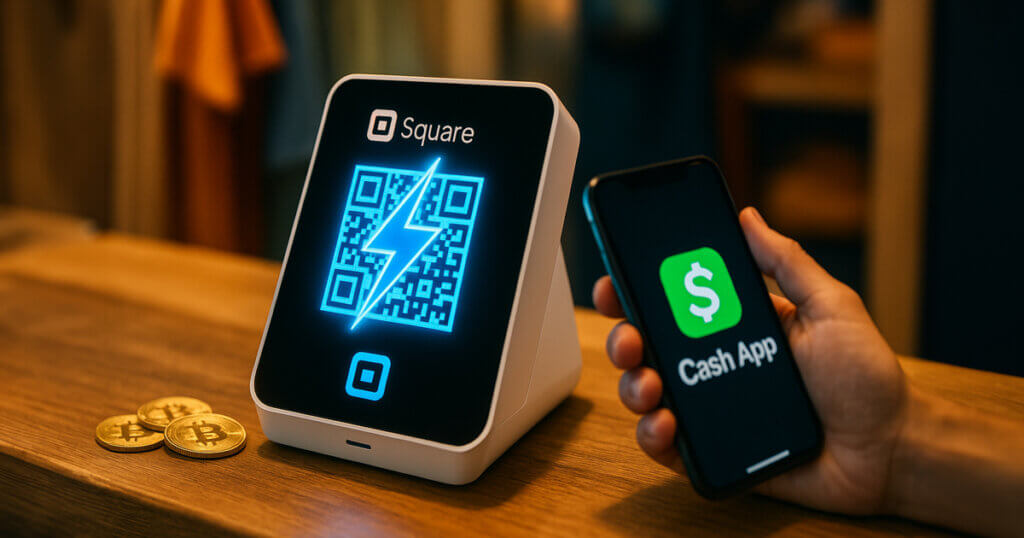
The tradeoff is concentration. Merchants can get instant confirmation, users can spend BTC without a direct transaction fee, and wallet providers can plug into an open API.
The first version also asks participants to rely on a payment rail where the miner behind the product helps control the route from checkout to final Bitcoin settlement.
GoMining says the rollout starts with up to 10 merchants and ecosystem partners, with thousands on the waiting list. That makes Gen1 an early controlled deployment built to measure whether miner-run settlement can attract wallets, merchants, and shoppers into a Bitcoin checkout loop.
GoBTC Pay Bitcoin checkout opens the integration path
GoBTC Pay's product page frames the system as a Bitcoin payment protocol for merchants and wallets, with early access open, merchant onboarding forms, a wallet and platform request flow, and access to API documentation.
The roadmap on the same page lays out a staged path for merchant POS, a dashboard, SDK support, merchant discovery, broader e-commerce support, P2P payments, fiat off-ramp tools, and spending controls, from wallet features to open payment rails.
Developers, wallets, and merchants can now evaluate the GoBTC Pay SDK and API rather than only the product concept.
The product page says payments are confirmed instantly at checkout, settle in Bitcoin, charge zero direct user fees, and avoid payment channels, wrapped tokens, sidechains, and fiat conversion at the point of sale.
Its FAQ says a customer payment is broadcast to GoMining's dedicated pool, which prioritizes it for inclusion in a block.
That setup creates a split experience. The merchant sees the transaction immediately enough to finish the sale. Final settlement follows later on Bitcoin, with GoBTC targeting an average on-chain settlement time of about 12 hours through GoMining's pool.
Merchant acceptance can feel instant while final settlement remains tied to the miner-operated route.
| GoBTC claim | Mechanism | Disclosure still needed |
|---|---|---|
| Instant checkout confirmation | GoBTC routes the transaction through GoMining's payment and pool infrastructure. | How merchants price the gap between checkout acceptance and final Bitcoin settlement. |
| On-chain Bitcoin settlement | Transactions are targeted for settlement through GoMining's dedicated pool. | Pool hashpower, block-production variance, and real performance under merchant volume. |
| Low merchant fee | GoBTC lists a 0.2% merchant fee split between pool miners and the initiating wallet provider. | Whether wallet providers and merchants see enough value in the 0.1%/0.1% split. |
| Non-custodial design | GoBTC describes a 2-of-3 multisig model involving the user, GoMining, and an independent recovery custodian. | The custodian's identity, recovery process, and third-party wallet implementation details. |
Bitcoin checkout economics are built around miners and wallets
GoBTC's fee design is the clearest sign that GoMining is trying to solve payments through incentives as well as user experience. The company says users pay no direct transaction fee, while merchants pay 0.2%.
For third-party transactions, GoMining says half of that fee goes to miners in the GoBTC pool, and the other half goes to the wallet provider that initiated the payment.
That fee split turns each transaction into a small distribution event. Miners receive a reason to support settlement, and wallets receive a reason to bring users and merchants into the network.
GoMining says it does not charge a fee on third-party transactions, framing the model as a way to drive adoption rather than lock every payment in its own app.
GoBTC also compares its merchant pitch with card-payment costs and settlement windows. That comparison should stay attributed to GoBTC, but the broader merchant backdrop is real: Visa's 2024 merchant settlement release shows that interchange rates and point-of-sale flexibility remain active pressure points for card networks.
Recent Bitcoin payment coverage has also framed lower-fee checkout as a merchant adoption pitch.
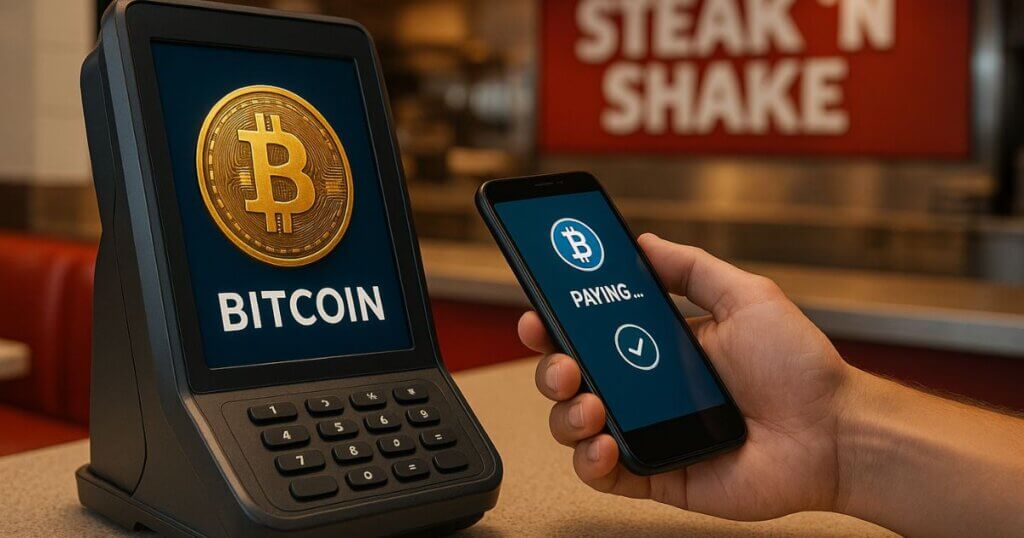
GoBTC is competing for attention with instant checkout acceptance, BTC-denominated settlement, and a fee split that rewards the wallets and miners needed to make the system useful.
Adoption remains unproven. GoMining says the first rollout will begin with up to 10 merchants and ecosystem partners, though the company has not named those initial participants.
A waiting list in the thousands shows interest. Merchant willingness to hold BTC from checkout sales, wallet provider integration priority, and real shopper spending volume will determine whether the rail moves beyond early access.
That makes the payment economics useful as a framing device rather than as evidence that the rail has already found product-market fit.
A merchant may like a 0.2% fee and faster checkout feedback, but the model still needs actual checkout volume, wallet distribution, and BTC treasury tolerance. Those operating decisions will determine whether the fee split becomes meaningful.
Pool control carries the settlement risk
The same design that makes GoBTC different also creates a main operating risk. GoMining says most Bitcoin payment companies rely on external mining pools, whereas it can prioritize GoBTC transactions because it mines blocks itself.
For merchants, that can sound practical: checkout feels fast, and final settlement still moves through Bitcoin.
For Bitcoin users, the architecture concentrates responsibility. A payment rail built around a miner-operated pool reduces one type of friction by placing more weight on GoMining's pool operation, transaction prioritization, settlement performance, and recovery design.
Miner-run settlement then becomes the central due diligence question for any wallet or merchant considering the rail.
The Stratum V2 mining protocol specification describes mining work that can be distributed by a pool or coordinated with job declaration and template distribution mechanisms.
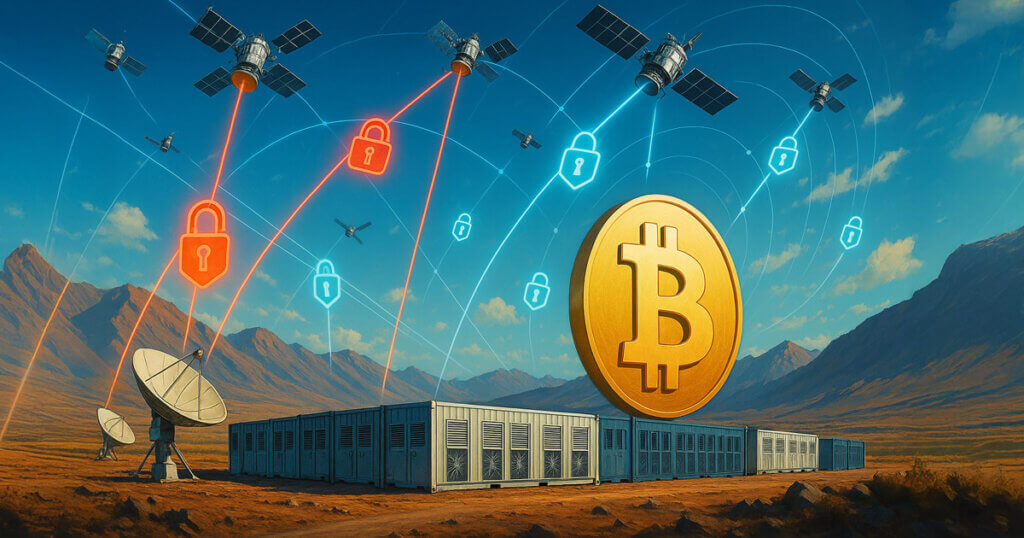
Bitcoin Optech's pooled-mining background treats Stratum V2 as part of the broader architecture for coordinating miners. The impact of decentralization depends on implementation: who selects transactions, who controls block templates, and how much influence the pool operator retains.
GoBTC Pay's public page states that payments are routed through GoMining's private or dedicated pool. That mechanism supports a simpler merchant experience while concentrating due diligence on pool governance, transaction selection, and settlement authority.
The custody model adds another layer. GoBTC describes a 2-of-3 multisig setup in which one key is with the user, one is held by GoMining as a co-signer, and one is held by an independent recovery custodian.
The company says GoMining cannot move funds unilaterally and that the custodian provides a recovery path if a user loses access.
That model sits between custodial wallet convenience and pure self-custody. The missing disclosures are practical: the custodian's identity, the recovery process, third-party wallet implementation, outage handling, and how merchants account for the roughly 12-hour settlement target while accepting payments instantly.
Those are integration details with operational consequences. Merchants need predictable checkout confirmation, custody handling, recovery procedures, and settlement timing for daily operations.
Wallets need sufficient fee share and customer demand to justify routing users into a payment flow tied to a single miner-operated settlement path.
Wallet and merchant uptake will define the rollout
GoBTC Pay's Gen1 launch gives Bitcoin payments a path built around direct BTC settlement through GoMining's pool. The protocol now includes SDK and API access, merchant onboarding, wallet-platform requests, and an early-access funnel for a first group of partners.
External participation is the main adoption hurdle. If outside wallets integrate, named merchants go live, and settlement performance holds up through real payment volume, GoBTC Pay could become evidence that mining infrastructure can play a direct role in Bitcoin commerce.
If adoption remains within GoMining's own ecosystem, or if merchants hesitate due to delayed settlement and dependence on pools, the product will look more like a miner-controlled shortcut around Bitcoin's old point-of-sale problem than a broadly adopted payment rail.
The June 19 launch makes that tradeoff concrete: Bitcoin payments that feel simpler at checkout, paired with new reliance on the miner running the rail.
The post appeared first on CryptoSlate.
read the full story
SBI And Startale Put Yen Stablecoins Back In The Institutional Spotlight
SBI And Startale Put Yen Stablecoins Back In The Institutional Spotlight …

Bitcoin’s Network Is Booming Even as Prices Remain Below Record Highs
Bitcoin usage is surging despite weak prices, as Ordinals and Runes drive network activity while ETF…

'Painful' Bitcoin Sell-Off Drags Ethereum, XRP and Dogecoin Lower as Crypto Stocks Dive
Bitcoin's slide to its lowest point in 21 months slammed the price of leading altcoins, while…

Bitcoin Collapses Below $60K, but Samson Mow Says Everything Is Fine
Offering a rare glimpse of optimism amid the extreme negative sentiment, prominent Bitcoin advocate…

Bitcoin price breaks below $60K support, can bulls prevent a deeper crash?
Bitcoin price has fallen to a make-or-break support zone near $59,000 after losing a key Fibonacci…

From Volatility to Yield: BASIS.pro Reports Rising Arbitrage Opportunity Flow as Bitcoin Trades Near $62K
Victoria, Seychelles, June 24th, 2026, Chainwire. Following new Base58 Labs market-structure…

XRP Is Down 50%, and a $785 Million Stablecoin May Be Part of the Problem
XRP (XRP) price has fallen 50% over the past year, even as activity on its network climbs toward…

Bitcoin retests June low after $850M liquidations rock crypto market
Bitcoin has fallen below $60,000 for a second time this month, triggering more than $850 million in…
Portnoy: 'It Seems Like Bitcoin Is Going to Zero'
Barstool Sports founder Dave Portnoy has challenged Bitcoin bulls to prove skeptics wrong.
Strategy Stock Falls Below $100 for First Time in Two Years as Analysts Pick Apart Its Bitcoin Bet
The break below $100 puts MSTR at a discount to its roughly $50 billion in Bitcoin and shifts the…

5 Market Signals Reveal How AI Stocks, Oil and Bitcoin Shook Wall Street
Markets split sharply on Wednesday as lower oil prices eased inflation fears, but pressure on…
Saylor’s STRC Bitcoin machine is turning shareholders into its cash backstop – causing a dilution trade-off
Strategy (formerly known as MicroStrategy) is discovering that strengthening one part of its…
'Stop Buying Bitcoin': Strategy Needs More Cash Fast, Analyst Says as STRC Hits New Low
STRC fell even lower Wednesday while MSTR bleeds. CryptoQuant says that Strategy needs to stop…

21Shares Concedes 4-Year Cycle Intact as Bitcoin Falls Below $60,000 Again
21Shares concedes Bitcoin's four-year cycle has not broken as BTC slips below $60,000, yet still…
BlackRock Says Bitcoin Is Maturing — Recommends Up to 2% Portfolio Allocation
TL;DR: BlackRock recommended its financial advisors a Bitcoin allocation of between 1% and 2% as a…

Bitcoin Hits $59,018 After a 5% Drop, Forcing $237M in Long Liquidations
On June 24, bitcoin fell 5% in 24 hours to a new year-to-date low of $59,018. This marks a nearly…
10x Research Warns Bitcoin Could Drop to $55,000 Before Finding a Bottom
TL;DR: Bitcoin could fall to $55,000 before bottoming out in this bear cycle, according to an…
Mining Profits Dry Up Across Bitcoin, DOGE, LTC, and BCH
Dogecoin and Litecoin miners face mounting pressure as mining profitability remains low across major…
Why Bitcoin crashed below $60K as support fails when buyers are needed most
Exchange inflows, ETF outflows, and long liquidations collided before buyers could stabilize the…