Bitcoin News: Marathon Digital Holdings disclosed $869,160 in vehicle armoring expenses for its CEO and CFO in its latest DEF14A proxy filing, $430,780 for CEO Fred Thiel and $438,380 for CFO Salman Khan, bringing Thiel’s total personal security bill to $4.3 million and Khan’s to $3.9 million for the year.
That is not a rounding error in an executive comp table. It is a formal corporate acknowledgment that holding large, publicly disclosed Bitcoin positions now requires the same physical threat mitigation as moving cash through a war zone.
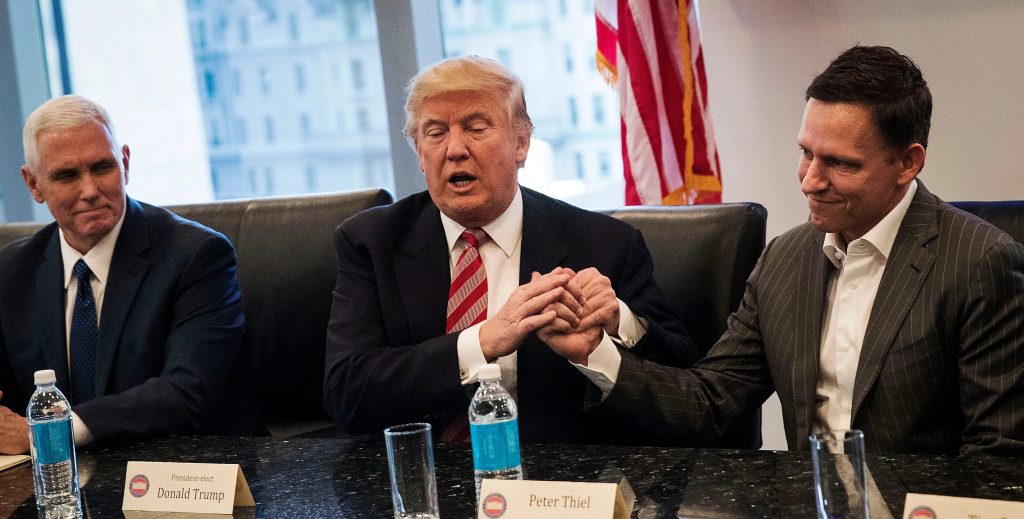
Photo: Peter Thiel
MARA’s disclosure sits at the visible tip of a broader capital allocation shift among Bitcoin OGs and crypto whales who have spent the last two years converting paper gains into hardened physical infrastructure. Armored vehicles are the entry point.
The full picture extends to underground Bitcoin bunkers, off-grid sovereign compounds, what the community has long called Bitcoin citadels, second passports, and jurisdictional diversification plays that would have looked paranoid in 2020 and look rational in 2025.
Bitcoin News: Cypherpunk Roots, The Ideology That Made Doomsday Prepping Respectable
The cypherpunk movement never treated financial privacy and physical self-sovereignty as separate problems.
The same mailing list culture that seeded Bitcoin’s intellectual foundations in the 1990s was openly skeptical of state institutions, central banking, and the durability of fiat systems. Satoshi’s whitepaper dropped in October 2008, weeks after Lehman collapsed, and the timing was not coincidental.
The earliest Bitcointalk forum threads mixed price speculation with explicit discussions of fiat collapse scenarios, jurisdictional escape, and the practical logistics of holding wealth outside the banking system.
That ideological substrate never went away. It just got better funded. Balaji Srinivasan, the former Coinbase CTO and one of the most prominent Bitcoin preppers in the ecosystem, formalized the framework in The Network State (2022), framing Bitcoin as cloud money for exit and advocating for physical startup cities and parallel societies as hedges against state failure.
Apparently $MARA spent over $800k on armored vehicles for their CEO & CFO.
The Financial Times made this sound like a bad thing.
I personally think it makes total sense — wrench attacks are skyrocketing and MARA owns more than $2 billion in BTC. pic.twitter.com/ggavzR9gHD
The network state concept is essentially cypherpunk political theory with a real estate budget attached.
The OG survivalist impulse also produced the citadel meme, a recurring Bitcointalk fantasy from the early 2010s imagining walled compounds where early holders retreat once fiat collapses and Bitcoin becomes the only functioning monetary network.
What read as fringe forum fiction then is now showing up in corporate proxy filings and luxury bunker waitlists. The narrative event happened years ago. The execution events are happening now.
From Armored SUVs to Sovereign Compounds: The Full Spending Picture
MARA’s $869,160 vehicle armoring spend is structurally notable precisely because it appears in a DEF14A, a document with legal standing, audited figures, and shareholder visibility.
The board’s justification was explicit: Bitcoin and Ethereum’s instant, anonymous transfer capabilities mean coerced credential handover can drain holdings in seconds with no recovery path, a threat profile that differs materially from executives at most traditional public companies. That logic applies equally to any individual holding a significant self-custodied BTC position.
Coinbase provides the comparison point at the higher end. The exchange paid CEO Brian Armstrong $7.6 million in personal-security-related compensation last year, covering home security, executive protection, family protection, and secure transportation.
Between MARA and Coinbase alone, two public crypto companies have disclosed over $16 million in executive physical security spending in a single reporting cycle. That is not a coincidence, it is an industry-wide risk reassessment made visible through disclosure requirements.
Below the public company disclosure layer, the private spending is harder to quantify but directionally consistent. The doomsday prepping market for ultra-high-net-worth buyers, anchored by operators like Survival Condo, Oppidum, and Vivos, has marketed fortified underground residences ranging from individual suites to full compounds with pools, cinemas, and staff quarters.
The $MARA#TwinTurbo shareholder value engine just cranked up to full speed:
Vivos founder Robert Vicino has described demand being driven by fears of geopolitical conflict, domestic instability, EMP disruption, and nuclear scenarios.
Armored vehicles and underground Bitcoin bunkers are frequently sold as a single security package by these operators; the tactical vehicle market, which CBC once described as looking like variations of the Batmobile, is explicitly paired with subterranean real estate.
For Bitcoin OGs sitting on positions acquired at sub-$1,000 cost basis, spending 1–3% of their stack on physical resilience infrastructure passes a straightforward expected-value calculation. If nothing bad happens, they own a well-equipped rural property.
If the scenarios they believed in when they bought Bitcoin actually materialize, that infrastructure cost looks cheap. The Forbes Digital Assets framing from February 2026 captures the logic precisely: gold is for conflict, Bitcoin is for escape, and armored vehicles are for the transition between the two states.